Simple Stretches to Ease Morning Stiffness
A calm, practical look at gentle movements that can help older adults start the day more comfortably.
Simple stretches to ease morning stiffness are a practical, low-cost habit that many older adults can build into the first few minutes of the day. Waking up with tight shoulders, achy hips or hands that are slow to open is a familiar experience for many people as they age, and it can make even routine tasks such as getting out of bed or making breakfast feel harder than they should. While stiffness has several possible causes, gentle movement is widely recommended by health organizations as one way to help joints and muscles loosen up. This article explains why stiffness tends to show up in the morning, when it deserves medical attention, and how to approach a short routine of gentle stretches safely.
Why Morning Stiffness Happens

After hours of lying relatively still, joints and muscles go without the regular movement that keeps them feeling limber during the day. Many people notice that tightness is most obvious in the first moments after getting up and eases as they move around. Health organizations such as the Arthritis Foundation and the Mayo Clinic describe morning stiffness as a common symptom of arthritis, and it can also appear in people who simply have been inactive for several hours.
The type of arthritis may influence how the stiffness behaves. Osteoarthritis, which is related to wear on joint cartilage, is often described as causing stiffness that fades relatively soon after getting up. Inflammatory conditions such as rheumatoid arthritis are more often associated with stiffness that lingers for a longer period, and some medical sources use roughly half an hour as a general dividing line. These are broad patterns rather than rules, and only a healthcare professional can say what is behind a particular person’s symptoms.
When Stiffness Calls for a Doctor’s Visit

Occasional tightness that eases quickly is one thing, but stiffness that is persistent, getting worse or accompanied by other symptoms is worth discussing with a doctor. Joint swelling, warmth or redness, unexplained fatigue, fever, numbness or tingling, and stiffness that lasts a long time each morning are among the signs that medical guidance may be useful. Stretching is not a replacement for diagnosis or treatment, and an underlying condition may need its own care plan.
Public health guidance on flexibility exercises generally advises moving slowly, avoiding bouncing, breathing normally and stopping if a stretch causes sharp pain. A mild sensation of pulling or tension is typically considered acceptable, but pain is a signal to ease off.
Preparing for Gentle Morning Stretches
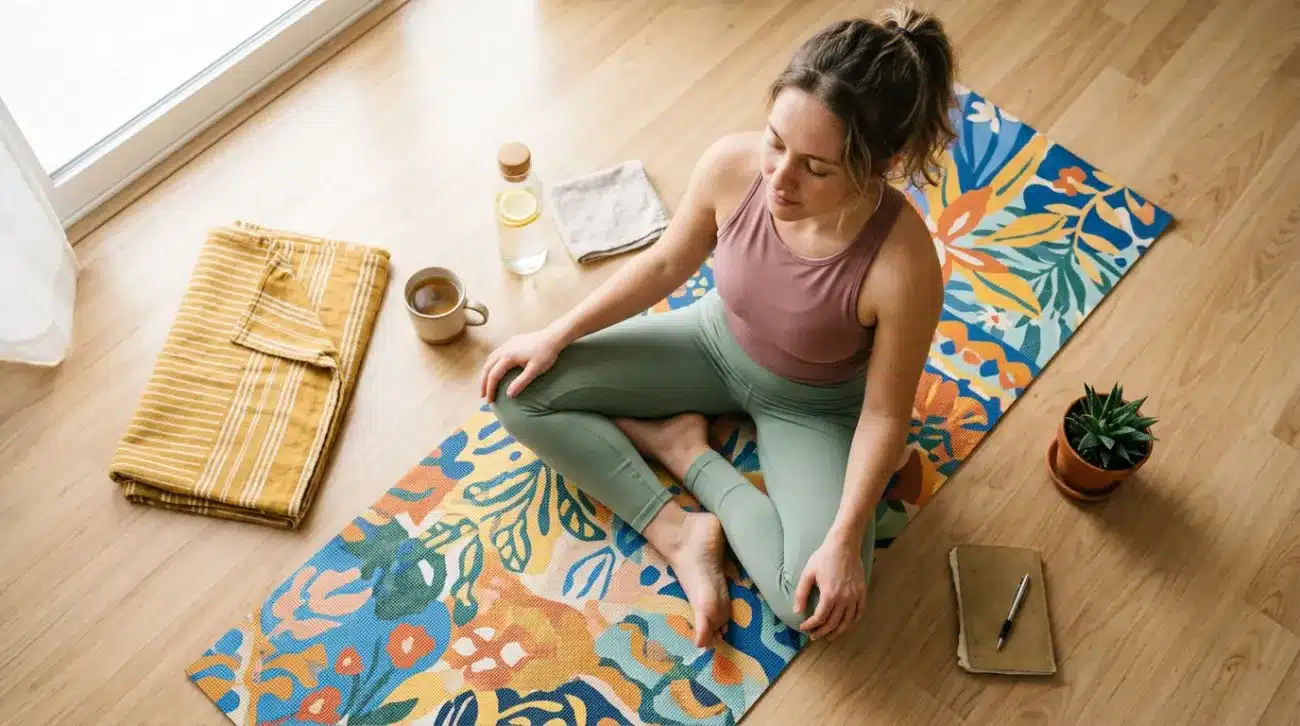
A little preparation can make a morning routine feel more comfortable. Some arthritis organizations suggest warming the body first, for example with a warm shower or a warm compress on especially tight areas, because warmth may help muscles relax. Wearing loose, comfortable clothing and keeping a sturdy chair or a firm countertop within reach also helps, particularly for any movements done while standing.
The pace matters as much as the movements themselves. Stretches are commonly held for around 10 to 30 seconds, as described in flexibility guidance from sources such as the National Institute on Aging, and each one is usually repeated a small number of times. Steady breathing, rather than holding the breath, helps keep the body relaxed. Because everyone’s joints and health histories differ, anyone with a recent surgery, a joint replacement, osteoporosis, balance problems or a chronic health condition should ask a doctor or physical therapist which movements are appropriate before starting.
Stretches You Can Begin in Bed

One of the gentlest ways to start the day is to stretch before standing up at all. Lying on the back, ankle pumps are a simple place to begin: point the toes away from the body, then pull them back toward the shins, repeating slowly several times. Small ankle circles in each direction follow naturally and wake up the lower legs and feet.
From there, a single knee-to-chest stretch can ease the hips and lower back. With one foot resting on the mattress, the other knee is drawn gently toward the chest with both hands behind the thigh, held briefly, and then lowered before switching sides. A gentle lying twist may follow, in which both knees are bent and allowed to lower slowly to one side while the shoulders stay relaxed against the bed. The range should stay small and comfortable, and any movement that pinches or hurts is a cue to reduce the motion or skip it.
Finishing in bed with a slow overhead reach, extending both arms above the head and lengthening the body, can loosen the shoulders and upper back. Taking a few calm breaths before sitting up gives the body a moment to adjust.
Seated Stretches for Neck, Shoulders and Hands

Sitting on the edge of the bed or in a firm, stable chair with both feet flat on the floor is a comfortable position for upper-body stretches. For the neck, the head can be turned slowly to look toward one shoulder and then the other, staying within a pain-free range. Another gentle option is to tilt one ear toward the same-side shoulder, pause, and return to center. Fast movements and large neck circles are generally best avoided.
Shoulder rolls are a classic way to loosen the upper body: lift the shoulders toward the ears, roll them back and down, and repeat several times before reversing direction. Gently squeezing the shoulder blades together and releasing can add a mild stretch across the chest and upper back, which may help counter the rounded posture many people fall into during the day.
Hands and wrists often feel stiff first thing in the morning, especially for people with arthritis. Slowly opening and closing the fists, spreading the fingers wide and then bringing them together, and bending the wrist up and down with the other hand offering light support are all simple options. Many arthritis resources recommend keeping hand movements smooth and unforced rather than pushing to the end of the available range.
Start in Bed
Ankle pumps and circles, single knee-to-chest, gentle lying twist and an overhead reach for the ankles, hips, back and shoulders.
Seated
Slow neck turns, shoulder rolls, shoulder blade squeezes, hand and wrist movements and a seated leg stretch.
Standing With Support
Calf stretch, gentle side bend and marching in place, all with a counter or sturdy chair within reach.
This grid is an editorial categorization of the stretches described in this article and does not represent measured data.